Perfectly Scrambled Eggs: Food Science & Culinary Mechanics
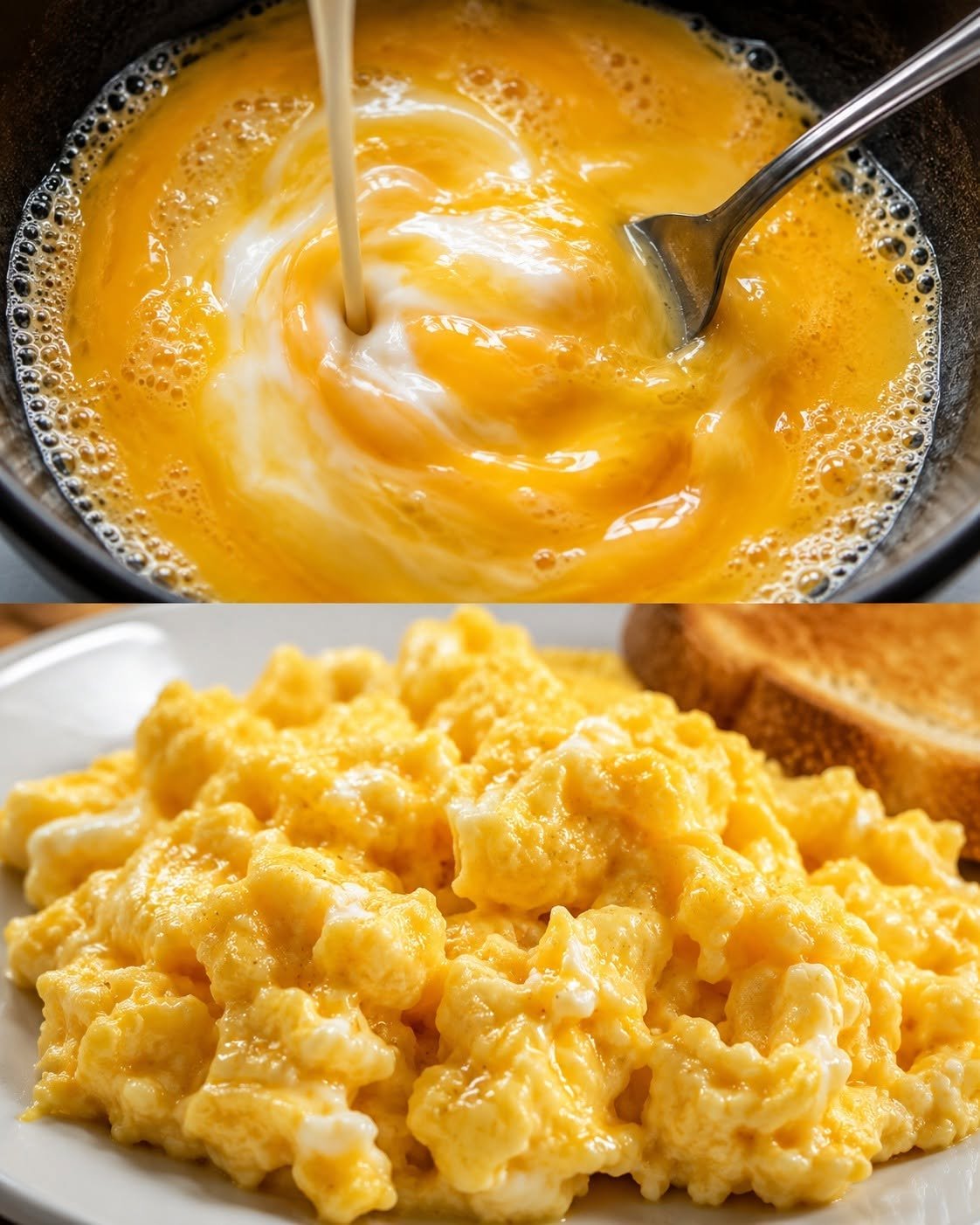
Achieving soft, velvety scrambled eggs depends on protein coagulation control and heat management. Cooking over low heat while gently moving the curds prevents muscle protein cross-linking, yielding a tender, moisture-rich texture rather than a rubbery consistency.
1. Culinary Science & Thermal Dynamics
-
Coagulation Temperature Control: Egg proteins (ovalbumin and yolk lipovitellins) begin denaturing and setting between $140^\circ\text{F}$ and $158^\circ\text{F}\ (60^\circ\text{C}\text{–}70^\circ\text{C})$. Cooking over medium-low heat prevents rapid protein contraction, which squeezes out trapped water (syneresis) and results in tough, watery eggs.
-
Lipid Buffering: Butter fat coats protein strands during heating. This lipid barrier slows down protein cross-linking, ensuring smooth, creamy curds.
-
Residual Heat Management: Removing the pan from direct flame while the eggs remain slightly wet allows ambient skillet heat to finish cooking them without drying out the curds.
2. Cooking Style Matrix
| Style | Thermal Profile | Curd Structure | Ideal Applications |
| Soft Scramble | Low heat; continuous gentle stirring | Fine, custard-like curds; moist texture | Plated breakfasts, avocado toast |
| Hard Scramble | Medium to medium-high heat; steady movement | Large, firm, fluffy curds | Breakfast burritos, wraps, sandwiches |
| Microwave Scramble | High power in $30\text{-second}$ bursts with stirring | Compact, uniform curds | Quick office meal prep |
3. Preparation & Cooking Workflow
For Complete Cooking STEPS Please Head On Over To Next Page Or Open button